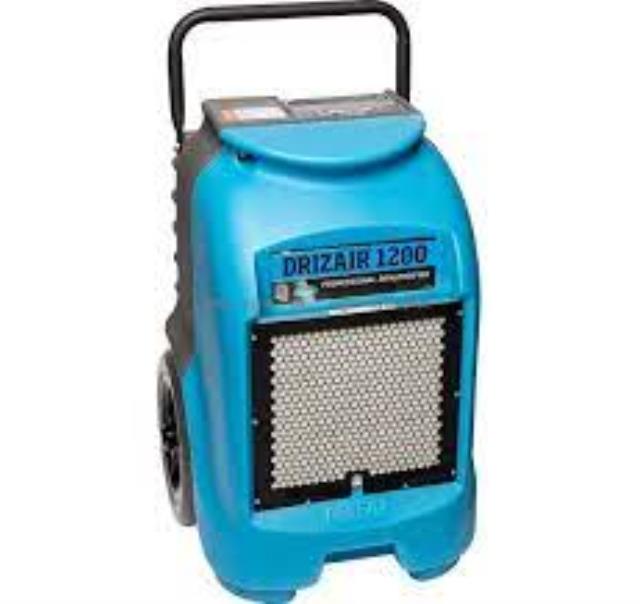

The Moisture Problem Unique to Lower Mainland Construction
In most of Canada, moisture in buildings is primarily a winter concern — condensation on cold surfaces during heating season. In Greater Vancouver, it's a 12-month challenge. The Lower Mainland averages over 160 rain days per year. Relative humidity on the North Shore regularly exceeds 80% from October through April, and summer fog and marine air keep ambient moisture levels elevated even during the dry season.
For contractors, this creates specific and persistent problems: drywall that won't dry before painting, wood framing that absorbs moisture during construction and takes weeks to stabilize, concrete that cures slowly in high-humidity environments, and buildings that develop mold and odour within days of a water intrusion event. These aren't edge cases — they're the baseline conditions for construction and renovation work in this region.
Commercial dehumidifiers, properly deployed, are the tool that keeps these problems manageable.
Refrigerant vs. Desiccant Dehumidifiers: Critical Differences for BC's Climate
Two fundamentally different dehumidifier technologies are available in the rental market, and choosing between them matters significantly in Vancouver's climate.
Refrigerant dehumidifiers work by passing air across a cooled coil, condensing moisture out of the air. They're effective and energy-efficient — but only when ambient temperatures are above roughly 15°C. Below that threshold, the coil can frost over, dramatically reducing performance. Low-Grain Refrigerant (LGR) units extend this range somewhat, remaining effective down to approximately 4°C, but still lose efficiency in cold conditions.
Desiccant dehumidifiers use a moisture-absorbing material (typically silica gel or a similar compound) to extract water from air regardless of temperature. They perform effectively in temperatures below freezing and continue removing moisture at very low relative humidity levels. For construction drying in a cold, unheated building during a Vancouver winter — a common scenario during interior fit-out of new buildings before the heating system is operational — a desiccant unit is often the only practical choice.
The practical guidance: use refrigerant (or LGR) units for summer construction, water damage restoration in occupied and heated buildings, and any application above 15°C. Use desiccant units for winter construction drying, cold unheated buildings, and applications requiring drying below the operating threshold of refrigerant equipment.
Construction Drying: Drying New Buildings Before Interior Finishes
One of the highest-value applications for construction dehumidifiers in the Lower Mainland is drying newly built structures before interior finishing work begins. Concrete slabs, freshly plastered walls, green lumber framing, and building paper-wrapped assemblies all release significant moisture during construction — and in Vancouver's ambient humidity, this moisture doesn't dry passively in a realistic timeframe.
The standard before interior finishes — hardwood flooring, painting, drywall taping and finishing — is to confirm that moisture levels in framing, subfloor, and slab are within acceptable limits. For hardwood flooring, this typically means slab moisture content below 3% (using a calcium chloride test) and framing moisture content below 19% (using a pin-type moisture meter). In a newly built North Shore house in November, hitting these targets without active dehumidification can take months of passive drying. With properly sized commercial dehumidifiers running continuously, the timeline compresses to weeks.
This is not a niche application — it's standard practice for any contractor on a tight finishing schedule.
Water Damage Restoration: The First 72 Hours Are Critical
Water intrusion events — burst pipes, appliance failures, roof leaks, or the increasingly common flooding events from atmospheric river storms — require immediate, aggressive drying to prevent mold establishment. In Vancouver's ambient humidity, mold can begin developing within 24 to 48 hours of a water event in areas that aren't actively dried.
The standard protocol for water damage drying combines three tools: air movers (high-velocity fans that increase evaporation from wet surfaces), dehumidifiers (to capture the evaporated moisture and remove it from the air), and moisture monitoring (to track progress and guide equipment positioning). Using a dehumidifier without air movers is slow and inefficient; using air movers without a dehumidifier simply moves moisture around the building rather than removing it.
For significant water damage events, multiple units and a professional restoration assessment are appropriate. For smaller events — a localized leak, a single wet room — a rented commercial dehumidifier and fan, deployed quickly, can prevent a minor problem from becoming a mold remediation project.
Sizing Your Dehumidifier: Pints Per Day and Air Volume
Commercial dehumidifiers are rated in pints of water removed per day (or litres per day) under standardized test conditions. A residential-grade dehumidifier might be rated at 30–50 pints per day. Commercial rental units typically range from 100 to 200+ pints per day, with large desiccant units capable of removing several hundred litres per day.
The rule of thumb for sizing: for a wet but not flooded space, estimate roughly 1 pint per day of dehumidification capacity for every 10–15 square feet of floor area in a standard-height room under moderate conditions. For saturated conditions after a flooding event, double or triple this estimate. Vancouver's high ambient humidity means passive reabsorption from the building envelope is higher than in drier climates — don't undersize.
Dynamic Equipment Rentals can help you calculate the right number of units for your space when you call.
Rent Dehumidifiers and Drying Equipment in Vancouver
Dynamic Equipment Rentals stocks commercial dehumidifiers and related drying equipment — including air movers and fans — at their North Vancouver and Port Coquitlam locations. Given the frequency of rain events and the ongoing demand for construction drying across the Lower Mainland, availability can be limited during high-demand periods.
Browse the heating and cooling category at dynamic-rentals.com or call 604-973-2171 to confirm availability and get advice on the right unit count and configuration for your specific application. The team can help you build a drying plan that fits your project timeline.