
Scaffolding vs. Aerial Lifts: Choosing the Right Access Solution
Both scaffolding and aerial lifts (scissor lifts, boom lifts) solve the same fundamental problem: getting workers and materials to height safely. But they serve different situations, and picking the wrong one costs time and money.
Scaffolding excels when the elevated work is sustained and covers a large horizontal area — a full exterior facade, multi-story painting or cladding, extended masonry work, or any job where workers need to be at the same height for days or weeks. Once erected, scaffolding provides a stable, continuous platform that doesn't require a certified operator to reposition and doesn't depend on battery charge or fuel.
Aerial lifts are more practical for tasks that require frequent repositioning, work in multiple areas of a site, indoor applications, or jobs where erecting scaffolding would take longer than the work itself. If you're changing one bank of warehouse lights or doing spot repairs on a facade, a scissor lift is faster and cheaper than scaffolding for that scope.
For multi-week facade or cladding work on a fixed area, scaffolding usually wins. For anything requiring mobility, a lift wins.
Frame Scaffolding vs. System Scaffolding: What's the Difference?
The two most common types available for rental in Vancouver are frame scaffolding (also called tube-and-coupler or sectional scaffolding) and modular system scaffolding.
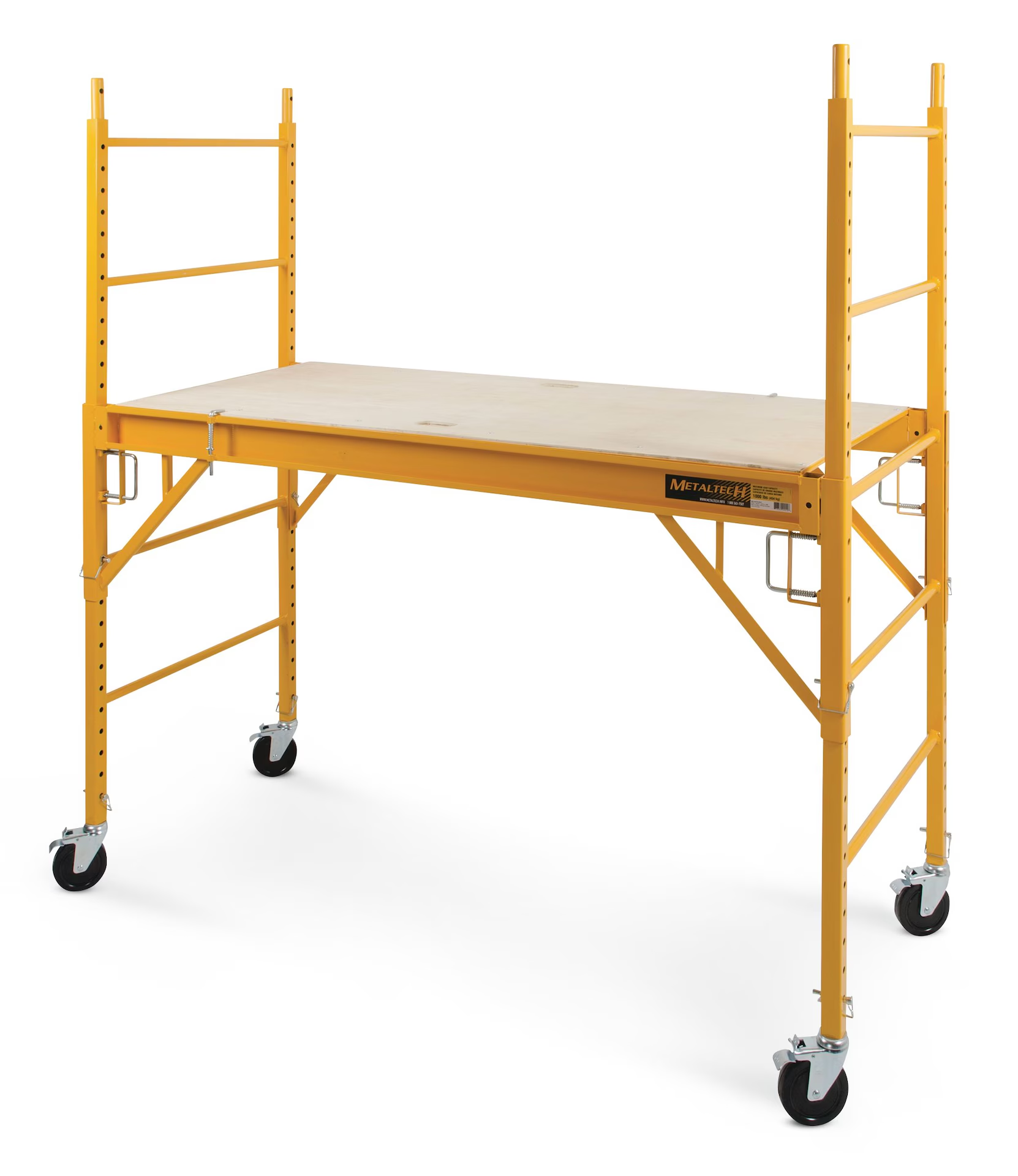
Frame scaffolding is the traditional, widely-used type — rectangular welded frames stacked vertically and connected with cross braces, with plank platforms at each level. It's cost-effective, widely available, and suitable for most residential and light commercial applications: exterior painting, window and door work, siding installation, and masonry.
System scaffolding (branded systems like Kwikstage or Layher) uses a rosette or cup-lock connector system to join vertical and horizontal members at precise, engineered intervals. It's faster to erect and dismantle, handles irregular configurations better, and is the standard choice for complex commercial projects. It's also typically more expensive to rent than frame scaffolding.
For most residential and small commercial jobs, frame scaffolding rental is the practical, cost-effective choice. Dynamic Equipment Rentals can advise on which type suits your project scope.
WorkSafeBC Requirements for Scaffolding in BC
Scaffolding in BC is governed by WorkSafeBC's OH&S Regulation Part 13. Key requirements contractors need to know:
Scaffolding must be designed and erected by a competent worker. For scaffolding over a certain height or complexity, a professional engineer's stamp may be required — confirm with WorkSafeBC or your site supervisor before erecting.
All platforms must be fully planked with no gaps greater than 25mm. Guardrails (top rail, mid rail, and toe board) are required on all working platforms above 3 metres.
Scaffolding must be inspected by a competent person before each use and after any event that could affect its integrity (storm, impact, modification). Inspection records should be kept on site.
Scaffolding must be adequately tied to the structure it's adjacent to at the required intervals — freestanding scaffolding is only permitted to limited heights before tying is mandatory.
Falls from scaffolding are among the most common causes of serious injury in BC construction. Proper erection, inspection, and use of personal fall protection where required are non-negotiable.
Tips for Efficient Scaffolding Setup and Takedown
A few practical principles that experienced contractors use to get more efficiency out of scaffolding rental:
Plan your erection sequence before materials arrive on site. Know where the base plates land, what the ground preparation requirements are, and how you'll access the interior of the scaffold as it goes up. A disorganized erection sequence wastes hours.
Level the base properly. Improperly leveled scaffolding creates risk and instability at height. Take the time to get the base plates and mudsills right before you start stacking frames.
Communicate your rental duration accurately. If a project runs long, extending the rental is straightforward — but rushing the takedown to return equipment on time creates safety risk. Build buffer into your rental duration on multi-week projects.
Rent Scaffolding in Vancouver from Dynamic Equipment Rentals
Dynamic Equipment Rentals stocks scaffolding for rental at their North Vancouver and Port Coquitlam locations, with the depth of inventory to supply multi-story configurations for both residential and commercial projects. They also carry ladders and related access equipment for lighter-duty elevated work.
Browse the scaffolding category at dynamic-rentals.com or call 604-973-2171 to discuss your project scope, required height, and rental duration. The team can help you calculate how many frames and planks you'll need for your specific application.